Thursday, March 21, 2013

Armory Available Now! Version 0.87.2-beta !


Get Armory!

Armory Available Now!   Version 0.87.2-beta !

Armory is officially Beta!  All of its advertised features are functional and stable:
  • Multiple wallets
  • Deterministic wallets
  • Watching-only wallets
  • Offline wallets
  • One-time paper backups (digital backups, too!)
  • GPU-resistant wallet encryption
  • Key import and sweep
  • Message signing
NOTE:  Armory is a fairly resource-intensive desktop application (1.0-1.5 GB RAM usage), but a full installation only uses 50MB of disk space.  Armory is intended for Bitcoin power users who frequently benefit from the small disk footprint portability.  There are immediate plans to reduce Armory’s RAM usage, but will result in using a lot more disk space.  Therefore, the RAM reduction will be done after the initial beta release, so that users who prefer the current design can have a stable version of it.  If you have difficulty running Armory because of the RAM requirements — fear not, a new RAM-friendly version is coming soon!
Please download Armory below, then visit the Quick Start Guide for further instructions.


Armory Download Links

Windows Installers:

The above installers will work for both online and offline Windows systems.  Nothing except for the *.msi file is needed to install*.
*Some Windows users have reported that Armory will not run without the MSVC++ 2008 Redistributable package from Microsoft.  If you are experiencing problems loading Armory in Windows after a fresh install, please download and install that package.
If you have GPG installed, see the instructions at the bottom of this page to verify the authenticity of the downloaded packages.  The signed hashes are available at:


Ubuntu/Debian Packages

The above packages should work on most modern versions of Ubuntu and Debian-based distributions.  However, the packages have dependencies that Ubuntu does not have by default, which will be downloaded during installation.  See the next section for installation on an offline Ubuntu system.
Package managers in the latest versions of Ubuntu may complain about “poor package quality.”  Unfortunately, Armory developers are better at developing software than packaging it.  However, there is nothing wrong with the packages, and it is okay to click through the warning with “Install Anyway.”
There are no binaries available for other Linux distributions.  However, the Linux build instructions have proven to be quite easy with just a few commands.    See Building Armory from Source.  It may need some minor adaptation, but most users have reported a smooth build experience.

Linux – Offline Bundle for Ubuntu 10.04-32bit

The link below is for setting up an offline system without ever touching the internet.  The zip-file contains the exact same 32-bit package as above, but also includes all dependencies needed for an Ubuntu 10.04-32bit system to run Armory in offline mode.  It can be unpacked and installed on the first boot of a fresh OS install!
You can use any version of Armory after 0.60 for the offline computer, even if your online computer is running the latest version.  Ubuntu 10.04-32bit (Lucid Lynx) was chosen because it will work on just about any computer built in the last 10 years.  If you are undecided about which distribution to use, this is a good choice.  It can be downloaded from the Ubuntu release page.  Select the first link labeled “PC (Intel x86) Desktop CD.”
To use the offline bundle, install the Ubuntu 10.04-32bit with all the default options on the system.  On the first boot, you can unzip the bundle, double-click on the “Install_Armory_All.sh” file and select “Run in Terminal.”  You will type your password, and then Armory will be installed.  Once installed, it can be accessed via “Applications->Internet->Armory.”   You can click and drag it from the menu to an empty space in the top panel for easier access.

Mac/OSX

There are no official releases of Armory for Mac/OSX, because of the difficulty of packaging applications for it.  If you are not afraid of the command line (terminal), then you can follow the instructions on the Building Armory from Source page.
NOTE: Since version 0.85-beta, printing paper backups has stopped working in OSX.  It is highly recommended that you hand-copy the data on the paper backup, or copy it into a another program that can print it.   Hopefully this issue will be resolved in the near future!
UPDATE:  There is a running bounty for anyone who helps produce a distributable OSX package.   You can donate to the address:  1Armory1HBqc8dNEvHDuT9AYWPWf98aCzJ.  Discussion about this bounty can be found at the Official Armory-for-OSX Bounty thread.


Changelog

Version:  0.87-beta   (13 Jan, 2013)

  • Inflatable QR Codes Everywhere! QR codes added to multiple areas where addresses are displayed,  including the “Create Clickable Link” window which displays the full payment request in the QR code. Double-click on any QR code to inflate it to full screen.
  • Added Paper Backup info to “Backup Individual Keys”: If you have a lot of imported keys, you can now backup everything using the “Backup Individual Keys” dialog. It displays the same four lines as on your paper backup, at the top of the key list. Also added option to include the address pool to the backup.
  • Real support for Bitcoin-Qt/bitcoind 0.8+: Prior attempt at supporting 0.8 Satoshi client was broken due to incomplete information about the changes. Support has finally been implemented and tested.
  • New Right-Click Menu Options
  • Bugfix: Copying Payment Requests
  • Bugfix: P2Pool Transactions:   P2Pool wallets no longer crash Armory
  • Bugfix: Sweeping and Importing Addresses

Version:  0.86.3-beta   (23 Dec, 2012)

  • New right-click menu for the main ledger and address lists.  Includes direct link to view the selected information on blockchain.info.
  • Upgraded coin-control functionality to make it easier to identify the list of available addresses
  • New warnings and confirmation windows when signing offline transactions, to make sure the user is verifying the data before signing and broadcasting.
  • Bugfix: Unused addresses no longer “disappear” from your wallet when Armory is restarted.  The addresses never actually went anywhere, they simply were marked as “never seen” and thus not shown to the user.
  • Bugfix: All fields in the transaction are now sortable.  An optimization made for version 0.85-beta broke sorting on some fields.

Version:  0.86-beta   (7 Dec, 2012)

  • Coin Control (Expert Mode Only):  You can now control the source addresses for any transaction you construct, and can also specify custom change addresses.  Send coins back to first input address, or specify your own.
  • Fixed the bug causing transactions to show up twice for wallets that were just created.

Version:  0.85-beta   (30 Nov, 2012)

  • Multi-threaded Armory!  You can manage your wallets while Armory is scanning the blockchain!
  • Upgraded protocol to work with Bitcoin-Qt version 0.8+
  • Restore paper backups directly to encrypted files
  • (Expert-only)  Manually extend address key pools
  • Manually enter “bitcoin:” URLs from the “Send” window (in case clicking on it didn’t work)
  • Address filtering in wallet properties
  • Fixed a bug causing Armory to not detect some zero-confirmation transactions
  • Endless polishing…

Version:  0.82.2-alpha

  • URL/Link Creator
  • Minimize-to-system-tray
  • Full logging system implemented to improve bug reporting
  • Specify change address for outgoing transactions (Expert-mode Only!)
  • “MAX” button to help with sweeping your wallet
  • Version checking and notification window

Version:  0.81-alpha

  • Blockchain engine upgrade:   Previous versions will break when blockchain reaches 2GB
  • Win32 Support!
  • Transaction History Export:  Export your ledger to *.csv file, which can be loaded into a spreadsheet application.
  • Preferences Dialog:  Set your default transaction fee, date-display, and notification options.
  • Warning:  Slow loading in Windows!  The new blockchain utilities work as expected in Linux, but can take up to 3 minutes in Windows!  Yes, this is bad, but it will load eventually.   I will be improving this in the next release
  • Python-Independent Linux Packages:  Debian packages (*.deb) no longer dependent on user’s installed python version.  There is now only one *.deb file for each 32-bit and 64-bit linux.
  • Signed Debian Packages Debian packages now signed with my offline GPG-key (98832223)
  • Complete support for coinbase/P2Pool transactions  With a little pickaxe icon, a progress bucket based on 120 confirmations, and no more scary warnings!
  • Billions of bug-fixes: There’s so many I can’t even remember them all…

Version:  0.77-alpha

  • Major usability fix:  Introduction of table-sorting in 0.76 was done incorrectly.  It caused serious performance/usability issues with high-activity wallets.  This has been fixed in 0.77.
  • Linux .deb packages compiled correctly:  Accidentally used the wrong compiler options for the linux builds, causing it to crash regularly on some architectures.  This too has been fixed!

Version:  0.76-alpha

  • Fixed layouts: Armory now remembers window sizes and table column widths for most dialogs.  Also, more-intelligent resizing.
  • Table Sorting:  All major tables are now sortable by clicking on the table headers.  Useful for searching for comments, addresses, transactions, etc.
  • Armory home directory:  You can now start Armory with the “–datadir” option to use a non-standard home-directory.  Useful if you want to keep your wallets on a USB key.
  • Fedora Fix:  Crypto++ needed to be manually updated in order to be compiled on gcc 4.7+.  This fixes compiling on any system with the latest gcc, which includes the latest Fedora.
  • Fixed wallet corruption bug!  Wallet descriptions/labels longer than 256 characters can cause wallet corruption!  It’s a very simple bug and has been fixed now.
  • Duplicate wallet issue:  If you have a full wallet and watching-only copy both in the Armory directory, only one will be loaded, and sometimes it’s the wrong one.  This is fixed

Version:  0.75.1-alpha

  • Fixed URL-handling bug when user only has one wallet (Windows and Linux)
  • Fixed *.deb menu creation (Linux)
  • It appears that *.deb files now work perfectly without uninstalling previous version (Linux)

Version:  0.75-alpha

  • Full installers for both Windows (*.msi) and Debian/Ubuntu (*.deb)
  • System tray icon and notifications:  notifications of Bitcoins sent, received, or disconnect/reconnect of Satoshi client
  • URI Handling!  Clickable URIs will now open Armory and pre-fill the send-BTC fields.  Will alwaysask for confirmation before sending.  Try it after installing Armory!

Version:  0.73-alpha

  • Fixed nasty bug in Windows!  Satoshi client will now download the blockchain again…
  • Bulk address import/sweep
  • Address books!  Automatically populated from all address you’ve ever used for sending or receiving
  • Color scheme dramatically improved — works great with dark color theme!.
  • Single-instance: Armory will prevent you from opening it twice.  Your wallet files are safer now!

Version:  (0.70-beta)-alpha

  • RAM-REDUCTION COMPLETE!
  • Armory now consumes dramatically less RAM, it will even run on a linux system with 512 MB of RAM!
  • While it uses less RAM, the optimizations had a trade-off in Windows — it loads quite a bit slower.  Also, the improvements did not enable Armory to run in full-mode on 32-bit Windows.

Version:  0.60-alpha

  • Added wallet migration tool — can import all keys from older Satoshi wallets into Armory.  Do not use tool if your wallet was created by Satoshi client 0.6.0 or later.
  • Added efficiency and robustness patches for Linux/OSX.

Version:  0.56-alpha

  • Bug-fix release!   
  • Fixed a bug introduced in 0.55 causing error sending transactions.
  • Fixed a bug in the offline-wallet interface if offline system has a stale blockchain file (it doesn’t need the blockchain, but it was failing if one was there)

Version:  0.55-alpha

  • Full Windows binaries!  No need to install other programs anymore.  The download links include ArmoryQt.exe and all the necessary .dll’s!
  • Added “–noblockchain” option to CLI arguments
  • Added a message signing interface, allowing you to create and sign messages with private keys of any of your addresses.  For demonstration purposes, I have included a signature from my donation address verifying the md5sum of the zip files.
  • Added an ECDSA calculator.  You can now do elliptic-curve arithmetic with a nice interface.  Multiply public keys together, manually compute public keys, add elliptic curve points.

Verifying Downloaded Files

Armory is used to protect tens of thousands of dollars worth of BTC.  For this reason, some users want to make sure that the Armory installer they download has not been altered in any way.  Armory Ubuntu/Debian packages (*.deb files) are signed directly using the Armory GPG Signing Key (98832223).  And each release comes with a signed file containing the MD5 hashes of each installer — they are included with each new version on the code.google.com download page.   However, it is not easy to verify these signatures unless you have access to a Linux machine.  At the moment, the verification procedure on Windows is very difficult.
To verify in Linux, “cd” to the directory containing the installer (usually Downloads), download and import the Armory signing key from the ubuntu key-server, install the signature verification program, and then use it verify the signatures on the *.deb files:
$ cd Downloads   # the directory containing the *.deb
$ sudo apt-key adv --recv-keys --keyserver keyserver.ubuntu.com 98832223
$ sudo apt-get install dpkg-sig
$ dpkg-sig --verify *.deb
If everything goes smoothly, you will see the following output:
$ sudo apt-key adv --recv-keys --keyserver keyserver.ubuntu.com 98832223
gpg: requesting key 98832223 from hkp server keyserver.ubuntu.com
gpg: key 98832223: public key "Alan C. Reiner (Armory Signing Key) <alan.reiner@gmail.com>" 

$ dpkg-sig --verify *.deb
Processing armory_0.85-beta_amd64.deb...
GOODSIG _gpgbuilder 821F122936BDD565366AC36A4AB16AEA98832223 1353699840
Processing armory_0.85-beta_i386.deb...
GOODSIG _gpgbuilder 821F122936BDD565366AC36A4AB16AEA98832223 1353699843

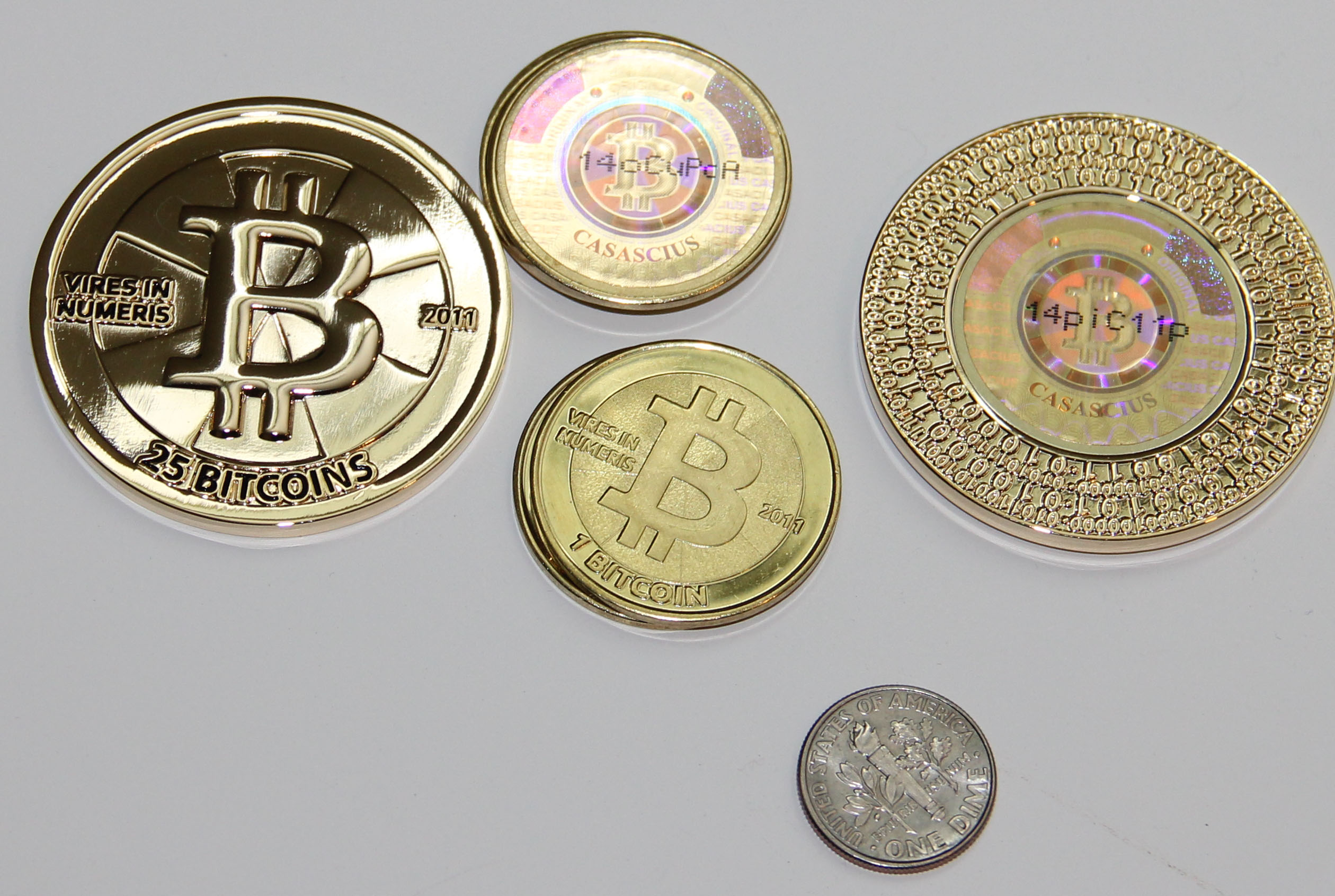
BITCOIN - 1 BITCOIN, 25 BITCOIN

BITCOINS LIVE BITCOIN TOKENS ACTUAL BITCOINS
1 BITCOIN, 25 BITCOIN

USA TO BTC - DWOLLA (USA) Cheapest Way

   
USD TO BTC

DWOLLA  (USA)  

DMONEY - DWOLLA - USD TO BTC

Bitcoin: more than just the currency of digital vice


Bitcoin: more than just the currency of digital vice

Bitcoin, the digital coin with a questionable past, is gaining ground as a legitimate currency, trading at $32 a share last week
Bitcoin
Bitcoin has become the world's best performing currency, with its value spiking at 130%. Photograph: Zach Copley/Flickr/CC.
Dale doesn't exactly look like an international crypto-criminal. He's soft-spoken, baby-faced, and a senior at an Ivy League college. But every couple of weeks the political science major logs onto the Silk Road, an online black market that has been described as an "amazon.com of drugs" to buy wholesale quantities of "molly" (also known as MDMA, a particularly "pure" form of ecstasy), LSD and magic mushrooms. Some of these will be for his personal use, and the rest he'll flog to less tech-savvy classmates at a mark-up of up to 300%. On a good weekend, he can net a profit of around $2,500. It's a more lucrative sideline than waiting tables.
 
While Dale prices his party favours in dollars, he pays for them the only way you can pay for anything on the Silk Road: by using Bitcoins, an untraceable digital currency founded in 2008 by the pseudonymous "Satoshi Nakomoto". Despite persistent efforts to uncover his identity, little is known about Nakamoto: he's the Banksy of the internet. Or, rather, he was. Nakomoto disappeared without a trace in 2011, after telling a developer "he'd moved on to other things". Bitcoin itself, however, shows no signs of vanishing: in the past two months it more than doubled its value against the dollar and after reaching an all-time high last Wednesday, it has been trading at above $32 a share.
Unless you're a major tech geek or a regular patron of the shadowy computer underworld known as the dark web, you've probably never heard of – let alone used – Bitcoins. But below the "real" economy of legal tender and federal reserves, Bitcoins fuel a shadow economy that connects students, drug dealers, gamblers, dictators and anyone else who wants to pay for something without being traced. It has found a niche as the currency of internet vice, digital "pieces of eight" for modern-day pirates.
Despite these unsavoury associations, Bitcoin is increasingly winning a place on the internet as a legitimate currency, albeit one that will probably never quite shake off its dodgy past. Bitcoin is part of a gradual, technological shift in the way we think about money. It poses a tangible threat to centralised banking and the guardians of fiat money. Bitcoin won't knock off the dollar any time soon; the euro can sleep easy. But it is clearly a force to be reckoned with. Bitcoin has become the world's best performing currency, with its value spiking 130% just this year.
Bitcoins, unlike the cash you have in your pocket, are finite. There are currently 10.8m Bitcoins in the system, and this will cap out at 21m coins by the year 2140, according to market research firm ConvergEx. Limiting supply has been a major plus for Bitcoins, and a major reason why prices have gone up.
If you want to buy Bitcoins you simply go to an online exchange service such as Bitinstant and convert your local currency into the virtual money. These are then stored in a "wallet", which functions as a sort of online bank account. You can then go and spend these anywhere that takes Bitcoins to buy anything from socks to drugs.
The Bitcoin network is structured like a guerilla movement: it is decentralised, controlled by its users rather than governments. This means it is (theoretically, at least) anonymous, and that, unlike credit cards and PayPal, which block payments from a number of countries, it enables instant payments to anyone, from anywhere in the world. That's why criminals love it and why some online retailers do, too. It's money without any kind of safety net below it. There's no legislation to protect your investment and you can't protest fraud.
It's worth bearing in mind that while Bitcoin operates outside the parameters of governmental control and is often used to dubious ends, so too is a lot of the money we see around us. The US Treasury printed 3bn $100 bills in the 2012 fiscal year and, 80% of them go overseas, according to Federal Reserve estimates. As Nicholas Colas, ConvergEx Group chief market strategist, notes, "many of them simply facilitate the global drug and arms trade, not to mention tax evasion and human trafficking".  Bitcoins fit into the world of real currency more than anyone would like to think.
While governments and legislators have long been waging wars on traditional funny money, they are only just starting to wake up to the effects alternative currencies may have on the financial landscape. In 2011, two Democratic senators, alerted to the thrills of the Silk Road by a Gawker article, wrote to the US attorney general demanding that something be done about Bitcoin. And in October last year, the European Central Bank published a paper that recommended that developments in virtual currencies be regularly examined to reassess the risks.
The association between Bitcoins and drugs is clearest on Silk Road, where the currency is the only method of payment that is accepted. But Dale, the Ivy League student, uses the currency with care – not least because of its volatility. "I try to purchase only as many as I will need for a specific transaction, because they have historically had pretty wild inflation and deflation."
Dale sees Bitcoins as the glue that binds a certain type of digital trade: "It seems to me like Bitcoins are essential for the currently thriving digital underground economy, but they also represent the beginning of an extra-governmenta, international digital economy."
Bitcoin isn't just for petty criminals, however: it has also made its debut in geopolitics. Last year, Iran was cut off from the European and US currency systems. High inflation caused the native currency, the rial, to plummet in value. With no dollars or euros available, Iranians used Bitcoin as a way to gain access to the international currency markets: they bought Bitcoins and later swapped them for dollars through an exchange site like Mt.Gox.
While Bitcoin has so far operated at the margins of the economy, there is some evidence that it is slowly entering the mainstream. Wordpress,Reddit, and Megaupload have just started to accept Bitcoins and you can now even buy pizza with them. In December, the currency took its biggest step towards legitimacy yet, after partnering with a payments service provider in France. They also had a booth at this year's Consumer Electronics Show (CES), which featured a picture of a wholesome looking woman holding an iPhone running a Bitcoin app.
Edward Castronova, a professor of telecommunications at Indiana University Bloomington, who has who pioneered the economic study of virtual worlds, doubts that Bitcoins will ever become a mainstream currency, however. Castronova's scepticism stems from the way that Bitcoin is structured as a currency with a fixed size. "It just isn't very fun. We've learned from game currencies that people like a little inflation in their economies. But Bitcoin is built to deflate. And we've just seen, culturally, people don't like deflation."
While it seems unlikely that Bitcoins will ever represent a full-scale challenge to regular money, they point to the rise of virtual currencies and changing definition of currency. Alternative currencies continue to slowly creep in around the edges of the economy: in February, Amazon announced that it is introducing its own custom currency called, rather imaginatively, Coins.
Starting in May, US customers will be able to use Coins to buy apps, games and in-app items on the Kindle Fire, with Amazon giving out "tens of millions of dollars worth of Coins" as a preliminary stimulus package. 
And calculations by the Economist in January 2005 suggested that the total stock of unredeemed frequent flyer miles was worth more than all the dollar bills in circulation.
Castronova notes that among young people, the mental accounting on different sorts of "money" is already very fuzzy. "Twenty-year-olds don't see any difference at all between dollars, gold coins, GPAs," said Castronova. "They're all just digital score sheets".
The future of money may or may not include a Federal Reserve Bank of Amazon, but it probably does involve the gradual decentralisation and democratisation of currency. Virtual currencies aren't just a new-fangled sort of Monopoly money. Rather, they may just be the thing that ends the monopoly on money.

How to Bitcoin - Links - Buy - Sell - Trade - Find


HowToitcoin
Bitcoin is your money, immune to abuse by governments and banks.


BITCOIN SOFTWARE
Bitcoin.org (Official Bitcoin Client)
Bitcoin Spinner (Android)
Bitcoin Wallet (Android)
Blockchain (Android)
Blockchain (iPhone)
Bitpay.com (merchant services)
Mtgox.com/merchant (merchant services)
Wiki: Small Business HowTo


BUY BITCOINS
BitInstant.com
LocalBitcoins.com
Coinbase.com
Bitcoinary.com
Bitcoin-OTC.com
Mtgox.com
Bitstamp.net
Bitfloor.com
Btc-e.com
CampBX.com
Aurumxchange.com
Memorydealers.com (physical)


CHARTS
HowMuchIsABitcoin.com
Bitcoincharts.com
Mtgoxlive.com
Bitcoin.clarkmoody.com
Bitcoin.clarkmoody.com/ticker
Blockchain.info
BtcCharts.com
Ferroh.com/charts
BitcoinMonitor.com


VIDEOS & MEDIA
WeUseCoins.com
Screwbanks.net
LoveBitcoins.org
blog.bitinstant.com
blog.coinbase.com
localbitcoins.blogspot.de
bitcoinnews.com
bitcoinpokerblog.com
youtube: Bitcoin.de Movie
youtube: Animation on Good Wife
youtube: Trace Mayer on FMT, Sept 2012
youtube: Trace Mayer on Anarchast, Nov 2012
youtube: Bitpay Mobile Payment
soundcloud: Freetalklive Aug 2012
mp3: Rebooting Money, Jan 2011
mp3: Jon Matonis on FS Newshour 10/31/2012


WEB WALLETS
Coinbase.com
Paytunia.com
EasyWallet.org
Blockchain.info/wallet (video)
Instawallet.org
Bitcoin247.com
Bitaddress.org (js generator)


INFO
Bitcointalk.org- Press Board
Bitcoinmagazine.net
Bitcoin.it (wiki)
Bitcoin Wiki- FAQ
Bitcoin Wiki- Myths
Wikipedia.org/Bitcoin
Bitcoinfoundation.org
Satoshi's Paper
Github: Bitcoin source code


SOCIAL
BitcoinTalk.org forum
Reddit.com/r/Bitcoin
Bitcoin.Stackexchange.com
Facebook.com/Bitcoin


SERVICES
CoinDL.com
Feedzebirds.com
BitQuestion.com
Coinworker.com


STORES
Bitmit.net
Etsy Bitcoin items
Etsy Bitcoin Team
Wiki: Trade
BitcoinStore.com
BitcoinWireless.com
BitVPS.com
ButteryFlyLabs.com
Avalon-asic.com
Coinabul.com
BitcoinClassifieds.net
Donate to Wikipedia


MORE
Bitcoin Logos and Graphics
stuffexists.com/bitcoin
SealsWithClubs.eu poker
SwitchPoker.com
BitcoinVideoPoker.com
Privnote.com


Bitcoin Bit Coin BitCoins - P2P Digital Currency


Bitcoin P2P Digital Currency

Bitcoin is a decentralized digital currency created by the pseudonymous entity Satoshi Nakamoto in 2009.
Bitcoin uses peer-to-peer technology to regulate Bitcoin’s balances, transactions and issuance according to consensus in network software. Bitcoins are issued to various nodes that verify transactions through computing power. It is established that there will be a limited and scheduled release of no more than 21 million Bitcoins, which will be fully issued by the year 2140. Bitcoin is currently the most widely used alternative currency with a total market cap at over 140 million USD (12/20/2012).
Bitcoin operates with no central authority, payments are made in Bitcoins which are digital coins issued and transferred by the Bitcoin Network. The data of all the transactions, after being validated with a proof-of-work system is collected into what is called the “block chain”.

How does a Bitcoin transaction work?

References and Links

Bitcoin Online Directories